

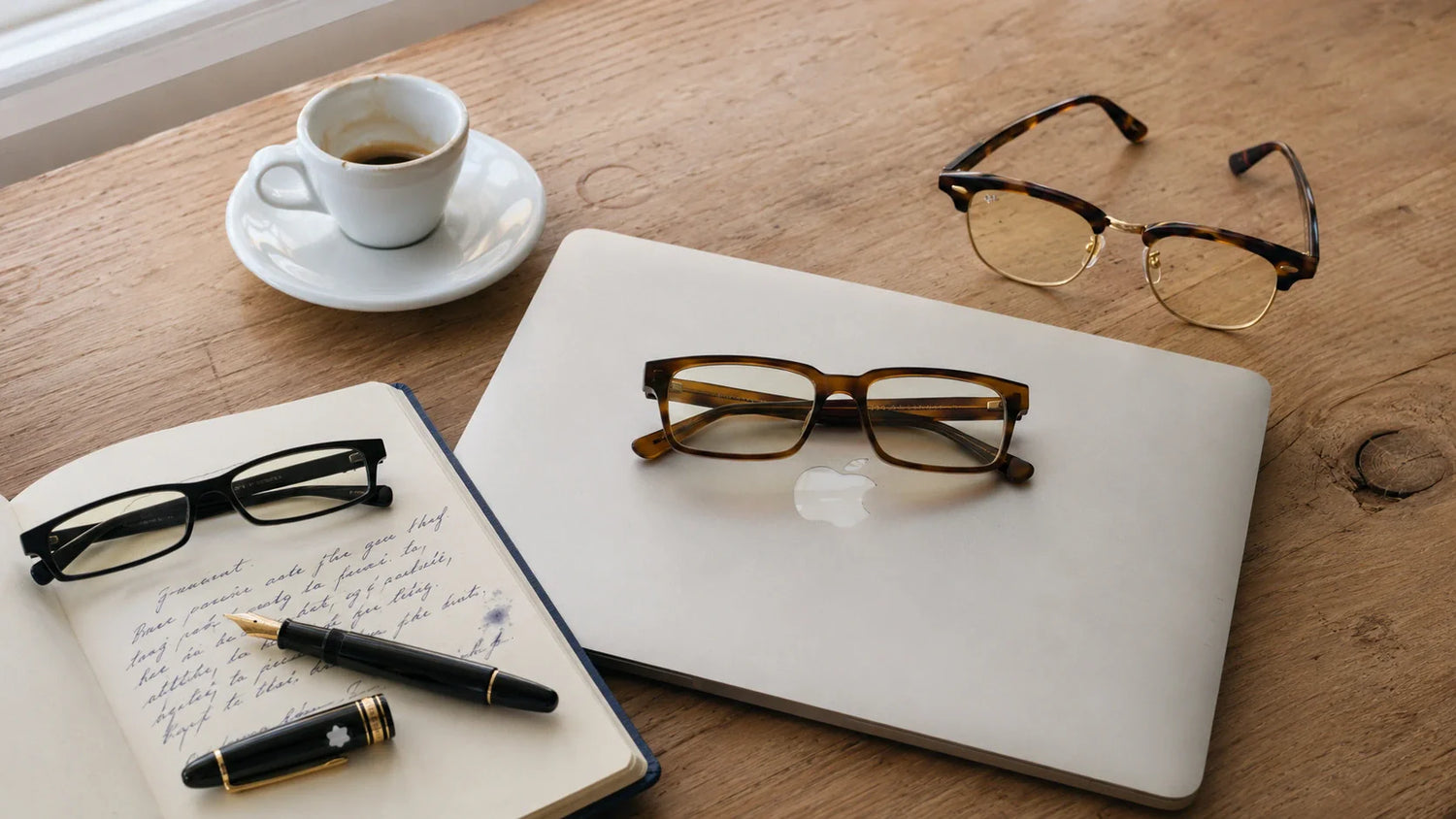
Blue light glasses are now a saturated category. Dozens of brands sell them, with claims that range from genuinely supported by clinical evidence to almost entirely marketing. This guide separates the brands by what they actually do, who they're for, and what they cost.
HARO Eyewear's Alpine Edition is included at the end with the same factual treatment as the rest. We've written this honestly because customers ask and because comparing without bashing is more useful than either pure self-promotion or false neutrality.
What should you look for in a blue light glasses brand?
Five things matter, in order:
- Filter strength in the 400-440nm range. This is the band most relevant to digital eye strain. Look for brands that publish a percentage filtered. "Blocks blue light" without specifics is a marketing claim, not a spec.
- Lens tint honesty. Effective filters produce a slight amber or yellow tint. "Crystal-clear blue light filtering" usually means the filter is very weak.
- Frame fit for long wear. Blue light glasses live on your face for 8-hour stretches. Pressure points and weight matter more than they would for sunglasses.
- Lens coating quality. Anti-reflective coating on the back side of the lens reduces ceiling-light reflections. Worth having.
- Return policy. Blue light effectiveness is subjective. A trial return window lets you test them honestly.
The blue light brands worth knowing in 2026
Felix Gray
Founded: 2016, New York.
Price band: USD 95-145.
Filter spec: Publishes 50% filter in 380-440nm range (their proprietary lens). Amber tint visible.
Frame materials: Hand-polished acetate, hand-finished metal.
Notable: One of the first dedicated blue light brands. Focused on office/desk wear. B Corp certified.
Best for: Buyers who want a specialist brand at mid-price.
Gunnar Optiks
Founded: 2006, Carlsbad, California.
Price band: USD 70-200.
Filter spec: Patented amber lens technology filtering 65-90% blue light depending on tier (Crystalline, Amber, Amber Max). Spec strength clearly published.
Frame materials: Lightweight composites and acetate.
Notable: The longest-running dedicated blue light specialist on this list — originally built for gamers and now widely adopted by screen workers. Most technically rigorous spec publishing in the category. Has a partnership with the U.S. Air Force.
Best for: Buyers who want the highest published filter percentages and aren't optimizing for a refined aesthetic.
Pixel Eyewear
Founded: 2016.
Price band: USD 70-95.
Filter spec: Publishes 50% filter at 450nm, 95% at 400nm. Slight yellow tint.
Notable: Direct-to-consumer specialist focused on screen work. Less brand-focused than Felix Gray, more spec-focused.
Best for: Functional blue light glasses without paying for design premium.
EyeBuyDirect (Blue Light)
Founded: 2005.
Price band: USD 19-50 base + USD 19 for blue light coating.
Filter spec: SightRelax + EBDBlue 360 coating. Filter strength not specifically published.
Notable: Lowest-cost specialist coating option. Wide frame selection but lower construction quality than dedicated brands.
Best for: Buyers on very tight budget or testing whether blue light glasses help before investing more.
Quay Australia (Blue Light)
Founded: 2004, Australia.
Price band: USD 50-80.
Filter spec: Standard blue light filtering, percentages not prominently published.
Notable: Fashion-forward Australian brand. Sunglasses-led with blue light glasses as secondary. Stronger on design than on technical specs.
Best for: Buyers who want fashion-forward frames over specialist filtering performance.
Zenni Optical (Blue Light)
Founded: 2003.
Price band: USD 6.95-50 frame + USD 16.95 for blue light coating.
Filter spec: Blokz lenses, blocks 100% UV and approximately 95% blue light up to 400nm. Tint nearly invisible.
Notable: Cheapest option. Massive frame selection. Wide quality variance.
Best for: Maximum budget constraint. The lenses work; the frames vary.
HARO Alpine Edition
Founded: 2025, born in Europe, US-registered.
Price band: USD 59 across all 7 models (single transparent pricing).
Filter spec: Approximately 30-40% filter in the 400-440nm range. Subtle amber tint visible.
Frame materials: Italian block acetate, polished metal where used. Hand-finished.
Notable: Each of the 7 models is named after a specific Alpine winter destination (St. Moritz, Davos, Zermatt, Chamonix, Cortina, Gstaad, Sils Maria). Quiet luxury construction at entry price. Sells in 12 markets with free worldwide shipping on orders over USD 65, 14-day returns.
Best for: Buyers who want quiet luxury construction and Mediterranean/Alpine brand identity in a blue light frame, at the entry price point.
Quick comparison by price band
- USD 20-50: Zenni Optical, EyeBuyDirect (budget tier, frame quality varies).
- USD 50-80: HARO Alpine Edition (USD 59), Quay Australia (USD 50-80), Pixel Eyewear (USD 70-95).
- USD 70-200: Gunnar Optiks (specialist with published filter percentages).
- USD 95-145: Felix Gray (specialist with B Corp certification).
How do you choose?
If you spend 8+ hours a day at a screen for work
Felix Gray, Gunnar Optiks, Pixel Eyewear, or HARO Alpine Edition. All four are designed for sustained workday wear with proper filter strength. Gunnar publishes the highest filter percentages (65-90%); Felix Gray has the longest track record in the office segment; Pixel publishes the most detailed mid-tier specs; HARO offers the lowest entry price with comparable filter percentage.
If you need maximum filter strength
Gunnar Optiks Amber Max tier. The clearest publicly published filter percentages in the category, originally engineered for sustained gaming sessions and adopted by professional screen workers.
If budget is your primary constraint
Zenni Optical or EyeBuyDirect. Filter performance is acceptable; frame quality is the trade-off. Better to start cheap, see if blue light glasses help you, then upgrade.
If you want quiet luxury aesthetic and brand identity in your blue light frame
HARO Alpine Edition. Italian acetate construction, place-based naming (St. Moritz, Davos, Zermatt, etc), single transparent USD 59 price. Distinct from fashion-forward brands like Quay and distinct from purely-functional specialists like Pixel or Gunnar.
Five HARO Alpine Edition models for buyers exploring this category
- St. Moritz '19 — narrow metal-acetate hybrid, lightest in the collection. Best for narrower faces.
- Davos 1924 — rectangular acetate, the most classic and versatile shape. Named after Thomas Mann's The Magic Mountain.
- Sils Maria — round acetate, soft on most face shapes. Named after Nietzsche's Engadin summer residence.
- Gstaad Palace — browline silhouette, more dressed-up for video calls or office.
- Cortina Tofane — small acetate frame, suited to narrower faces. Named after the Italian Dolomites.
One more thing: do you actually need blue light glasses?
If you spend less than four hours a day at screens and mostly outdoors, the benefit is minimal. If you spend more than four hours and especially if you use screens after sunset, the benefit is real but compounds over weeks, not minutes. Don't expect instant relief on day one — the effect on eye strain and sleep quality is measurable but gradual.
For the full evidence-based overview of what blue light glasses do (and don't do), read our pillar guide on the topic: Blue Light Glasses: What They Do, When You Need Them, How to Choose.
This guide was written by the HARO Eyewear editorial team. Where we cite other brand facts, we've used publicly available information from each brand's official website. Price bands are approximate as of 2026.

Hinterlasse einen Kommentar
Diese Website ist durch hCaptcha geschützt und es gelten die allgemeinen Geschäftsbedingungen und Datenschutzbestimmungen von hCaptcha.