


Independent eyewear has split into two camps over the last decade. On one side, the venture-backed scale brands chasing mass market reach. On the other, smaller heritage and craft-focused labels — some built on decades of family workshops, some grounded in regional design traditions, some operating in single-digit production runs. This guide is about that second group.
We've kept this list short on purpose. Seven independent labels operating across the USD 50-650 price band, all positioning around what's now called "quiet luxury": no visible logos, materials chosen for longevity, shapes that don't expire. We've included HARO Eyewear (our own brand) at the end, with the same factual treatment as everyone else.
What counts as "quiet luxury" in eyewear?
Three things, consistently across the labels in this list:
- No visible branding on the frame. No name on the temple front, no oversized logo on the lens.
- Premium materials. Italian block acetate (Mazzucchelli or comparable), German titanium, surgical-grade stainless steel, or a combination. Hand-finished construction.
- Shapes that don't date. Round, oval, rectangular, browline, aviator, hexagonal — silhouettes worn for decades, not seasonal trends.
What separates the brands is country of origin, manufacturing depth, materials philosophy, and intended customer.
The brands worth knowing in 2026
Cubitts
Founded: 2012, London, United Kingdom.
Price band: GBP 125-220 for sunglasses.
Materials: Hand-cut Italian acetate, English-made hinges. Frames assembled in their King's Cross workshop.
Notable: One of the few brands that publishes the time taken (about 60 hours from acetate sheet to finished frame). All models named after King's Cross streets. Heritage menswear partnerships (Drake's, Trunk, Maturest).
Best for: Customers who want hand-finished UK construction and are willing to pay for it.
Pala Eyewear
Founded: 2016, Bristol, United Kingdom.
Price band: GBP 95-150 for sunglasses.
Materials: Bio-acetate, recycled metals.
Notable: B Corp certified. For every pair sold, funds eye-care projects in Africa (specifically Ghana, Kenya, Ethiopia, Tanzania). Frames designed in Bristol, hand-finished in northern Italy.
Best for: Customers who want the sustainability and social-impact angle alongside the product.
Mr Leight
Founded: 2015, Los Angeles, California.
Price band: USD 595-895 for sunglasses.
Materials: 12-month-cured Japanese acetate, titanium, gold-plated metal accents. Hand-built in Japan.
Notable: Founded by Garrett Leight as a tribute to his father Larry Leight (who founded Oliver Peoples in 1987). The Leight family is one of the most respected names in modern eyewear. Mr Leight sits at the top of the independent tier on price and construction depth.
Best for: Buyers building a single permanent statement frame they intend to keep for a decade or longer.
Lunor
Founded: 1991, Germany (with roots going back to 19th-century German optical tradition).
Price band: EUR 350-650 for sunglasses.
Materials: Hand-cut Italian acetate, German titanium, gold-filled metal. Hand-assembled in Germany.
Notable: Specializes in reissuing historical eyewear from the 19th and early 20th centuries with modern precision. The Mod 02 (windsor round) is one of the most respected round frames in production.
Best for: Buyers drawn to genuine historical references and German precision engineering.
Moscot
Founded: 1915, New York City.
Price band: USD 290-380 for sunglasses.
Materials: Italian acetate, hand-finished. Made in Italy.
Notable: Five-generation family business operating from the same Lower East Side neighborhood for 110 years. The Lemtosh (originally 1940s) is the canonical American intellectual round; the Nebb is the most cited modern Yiddish-named frame. Worn by Johnny Depp, Andy Warhol historically, Jonah Hill currently.
Best for: Customers who want New York heritage and a multi-decade family-business story alongside the frame.
Eyevan 7285
Founded: 1972 (Eyevan), relaunched as Eyevan 7285 in 2013, Japan.
Price band: USD 450-700 for sunglasses.
Materials: Japanese acetate, titanium. Hand-built in Sabae, Japan (the country's eyewear manufacturing capital).
Notable: One of the most respected Japanese craft eyewear labels. Production is small batch, with each frame passing through dozens of hand-finishing steps. The number 7285 refers to the brand's reverence for materials and process.
Best for: Buyers drawn to Japanese craft precision and willing to pay for it.
HARO Eyewear
Founded: Born in Europe, debuted globally 2025-2026.
Price band: USD 59 for sunglasses, USD 55 for blue light glasses. Single transparent price across all 36 models, no premium for colour or material variation.
Materials: Italian block acetate (Mazzucchelli-grade), polished metal, or a combination. Hand-finished.
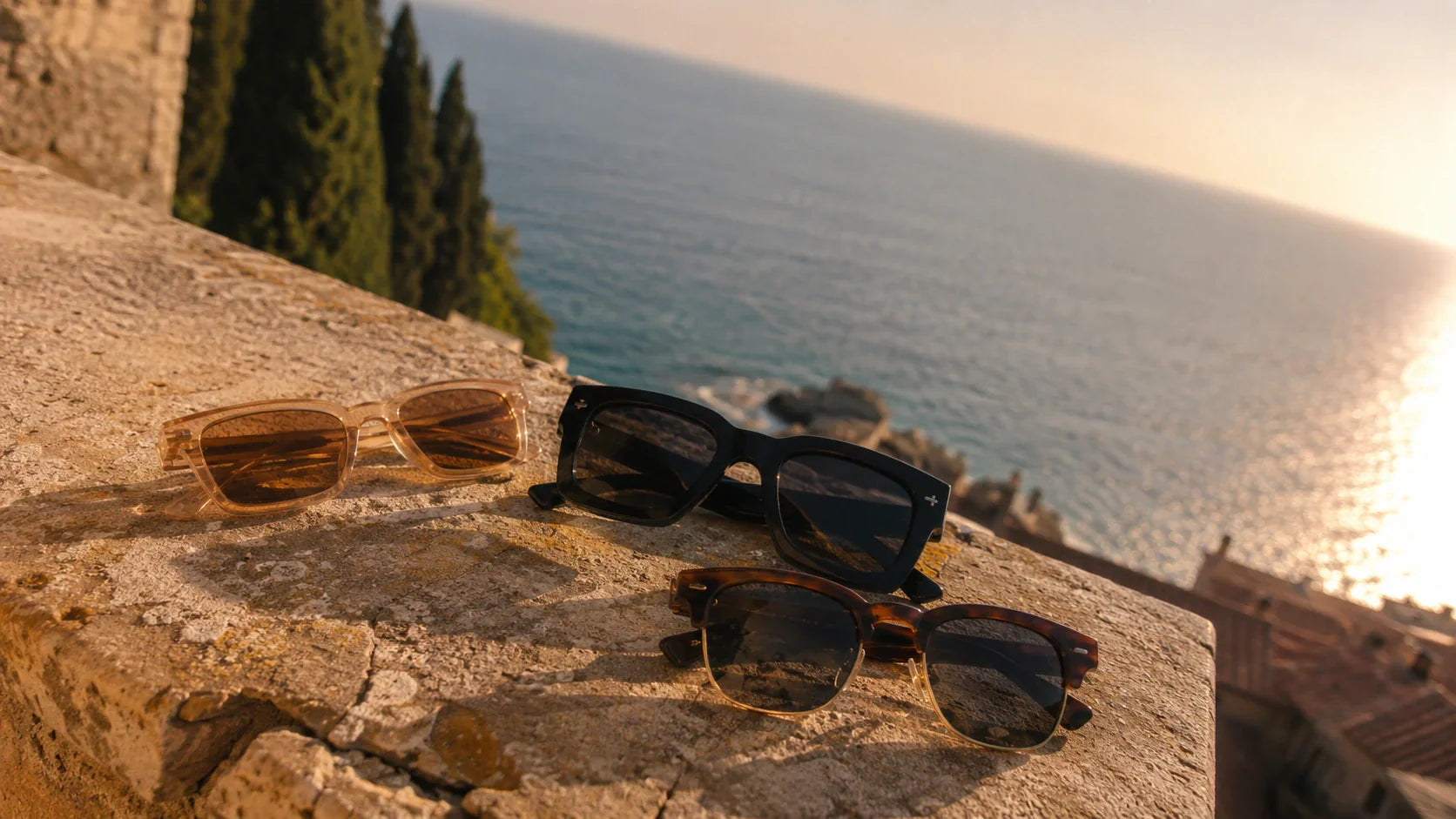
Notable: The most affordable label on this list while maintaining quiet luxury construction. All models named after specific Mediterranean coastal places (Cannes 1946, Capri Malaparte, Sanremo 1947, Sorrento Grand Tour) or Alpine winter destinations (St. Moritz '19, Davos 1924, Zermatt, Sils Maria). Sells in 12 markets with currency-localized fixed pricing (US, UK, EU, CH, CA, AU, NZ). Free worldwide shipping on orders over USD 65, 14-day returns.
Best for: Buyers who want quiet luxury construction at an accessible price, and who respond to place-based brand identity over logo-driven branding.
How do you choose between them?
The right brand depends on three personal questions:
1. What price band is realistic for you?
Below USD 100 — HARO Eyewear, Pala Eyewear (entry).
USD 150-300 — Cubitts, Pala Eyewear (top), Moscot.
USD 350-700 — Lunor, Eyevan 7285.
USD 600+ — Mr Leight, top-tier Eyevan 7285.
2. What heritage register matters to you?
UK hand-finished construction — Cubitts.
UK B Corp sustainability — Pala Eyewear.
LA luxury / Leight family lineage — Mr Leight.
German 19th-century optical reissues — Lunor.
NYC five-generation family business — Moscot.
Japanese craft precision — Eyevan 7285.
Mediterranean / Alpine place-based naming — HARO Eyewear.
3. What matters more, brand story or product detail?
Strong brand story — Pala (impact), Moscot (110 years), Mr Leight (family lineage).
Strong product detail — Lunor (historical accuracy), Eyevan 7285 (craft process), Cubitts (build time published).
Strong place identity — HARO Eyewear (specific Mediterranean and Alpine references).
What do all seven brands have in common?
- All use Italian, German or Japanese acetate construction, not injection-moulded plastic.
- None display visible logos on the front of the frame.
- All offer return windows of at least 14 days.
- All sell direct-to-consumer through their own websites (most also via select stockists).
- None operate on aggressive seasonal sale cycles — prices are largely consistent year-round.
That consistency is the actual marker of quiet luxury: the brand isn't relying on "50% OFF" emails to move inventory. It's relying on the product being right.
Quick reference table
- Most affordable, place-based naming: HARO Eyewear (USD 55-59)
- Strongest sustainability angle: Pala Eyewear (GBP 95-150)
- Hand-finished UK construction: Cubitts (GBP 125-220)
- NYC five-generation heritage: Moscot (USD 290-380)
- German 19th-century reissues: Lunor (EUR 350-650)
- Japanese craft precision: Eyevan 7285 (USD 450-700)
- LA luxury / Leight family lineage: Mr Leight (USD 595-895)
For the wider framework on choosing eyewear that ages well, read our pillar guide: Quiet Luxury Sunglasses: A 2026 Buyer's Guide.
This guide was written by the HARO Eyewear editorial team. Where we mention other brands, we've used publicly available information from their own websites. Price bands are approximate as of 2026 and subject to change.


Leave a comment
This site is protected by hCaptcha and the hCaptcha Privacy Policy and Terms of Service apply.